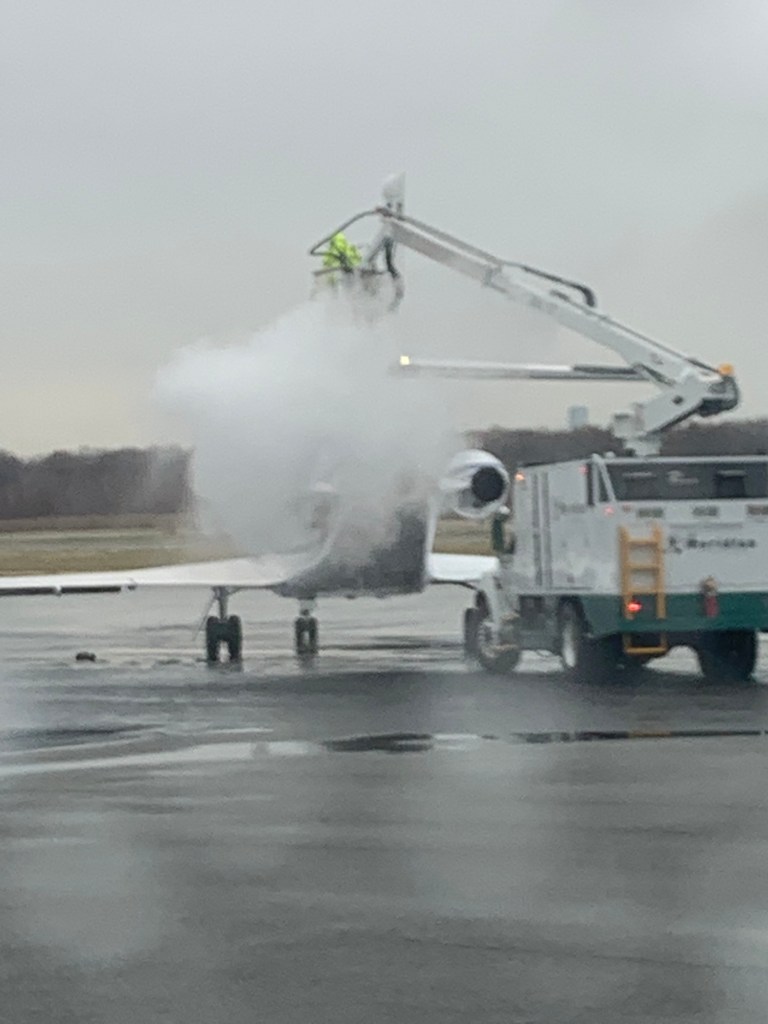
In a recent development, the Federal Aviation Administration (FAA) has released new guidance that brings significant changes to the calculations on ice deterrence effectiveness. This update is set to have far-reaching implications for aviation safety and the way aircraft handle icy conditions.
In a recent information for operators (InFo), the FAA cautions flight crews and ground deicing service providers to refrain from using “Table B.2.4 Amount of Fluid for Anti-Icing with Thickened Fluids” published in SAE AS6286 (Revision B) as the basis for determining if the aircraft anti-icing fluid has been applied effectively.
Ice accumulation on aircraft surfaces, such as wings, tail, and propellers, poses a serious threat to flight operations. In the past, de-icing and anti-icing techniques have played a crucial role in mitigating these hazards. However, with the FAA’s latest guidance, the approach to determining the effectiveness of ice deterrence methods takes a leap forward.
The updated guidelines introduce a more comprehensive and data-driven assessment of ice deterrence effectiveness. By utilizing advanced modeling techniques and incorporating real-life scenarios, the FAA aims to provide more accurate recommendations for pilots and airlines when it comes to dealing with icy conditions.
The revised calculations take into account various factors, including aircraft speed, temperature, humidity, and the type of anti-icing or de-icing fluids used. By considering these variables, the FAA intends to enhance the safety and efficiency of flight operations during winter conditions. The FAA informed in a separate notice, that deicing program information and guidance documents are being relocated.
This new guidance comes as a welcome change, as it ensures that aviation stakeholders are armed with the most up-to-date information and recommendations.
 Professional Aviation Solutions